Black Technology Fully Loaded! TSMC 3D Fabric Packaging Redefines the Ceiling of Chip Stacking
Opening: The Era of Chip "High-Rise Buildings" Has Arrived
If a chip were compared to a city, early chips were all bungalows, with all components laid flat on a single silicon wafer. To boost performance, one could either build houses more densely (shrink the process node),
or simply build upward with skyscrapers—and TSMC's 3D Fabric is the most advanced "super-skyscraper construction technique" in today's chip world.
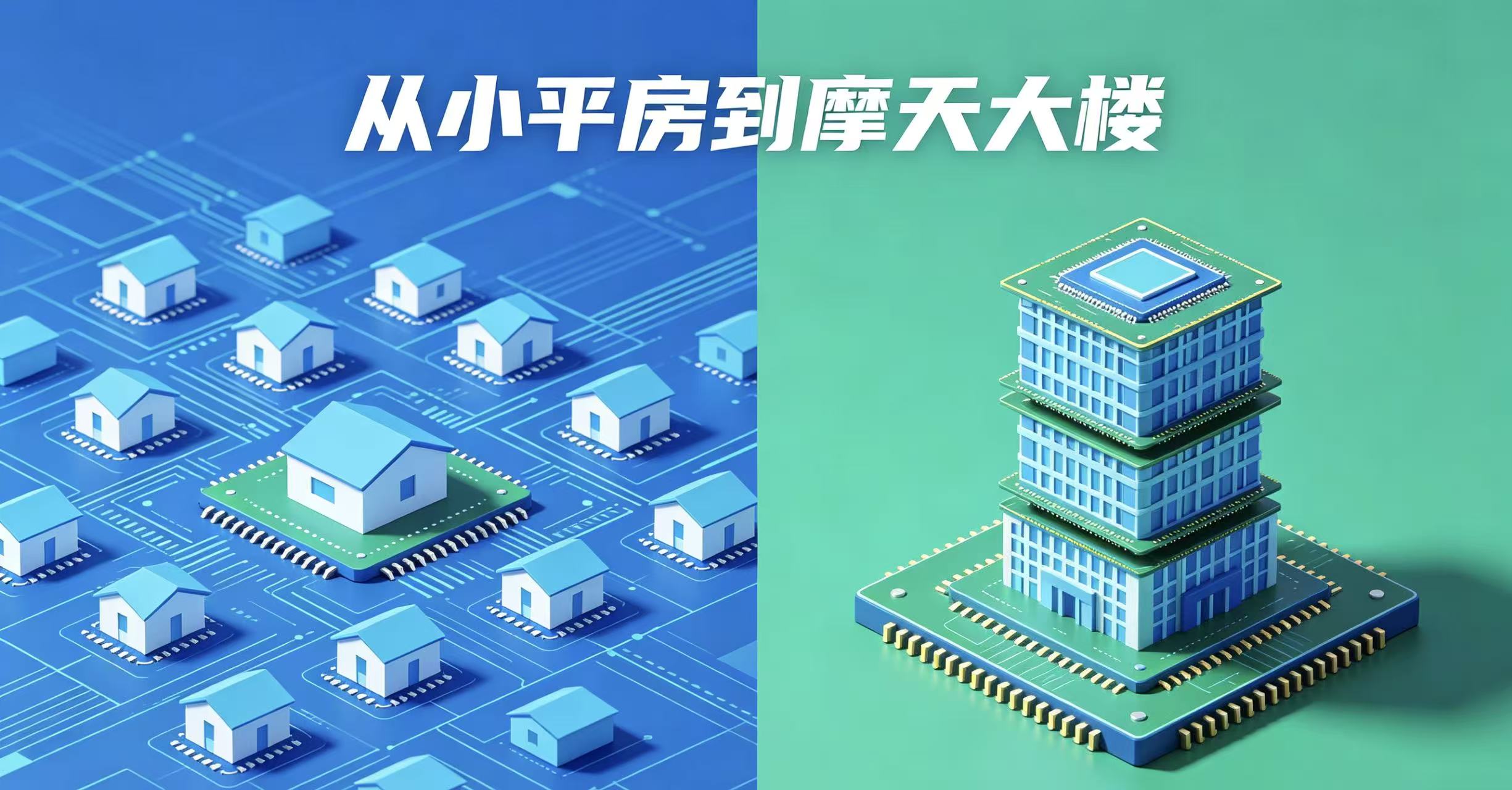
Traditional packaging merely "puts a shell on and connects wires" to the chip, but 3D Fabric can three-dimensionally stack and tightly interconnect chips with different functions like building blocks,
making chips smaller, faster, and more power-efficient. Today, in plain language, we'll break down this top-tier packaging process step by step—you'll fully grasp this black technology after reading.
Step 1: Chip "Prefabrication" Processing—Dicing and Polishing, Preparing Basic Modules
Just as building a skyscraper requires preparing construction materials first, the first step of 3D packaging is preparing various bare chips (Die).
TSMC will first manufacture chip modules with different functions based on requirements: logic chips responsible for computation, cache chips for storage, high-frequency communication chips, and so on.
These chips are then finely diced, surface-polished, inspected for quality, and defective ones are eliminated. It's just like before constructing a building, where steel bars, floor slabs, doors, and windows are all pre-processed into standard prefabricated components, ensuring every piece of "building material" is qualified and usable.
Step 2: Wafer Bonding—Chips "Firmly Bonded Together," Achieving Bottom-Layer Interconnection
This is one of the core aspects of 3D Fabric and the biggest difference from conventional packaging.
Ordinary chips only have surface wiring, whereas 3D Fabric uses Hybrid Bonding technology to tightly bond two or even multiple layers of wafers/chips face-to-face.
There are no traditional tiny metal wires; instead, micron-scale metal contacts are directly "welded" together.
To put it in an analogy: traditional connections are like two wires interfacing across empty space, resulting in slow signal transmission and susceptibility to interference; 3D bonding is equivalent to two iron plates seamlessly welded together,
allowing signals to travel a "direct path," completing massive data transfers in a single second and minimizing latency.
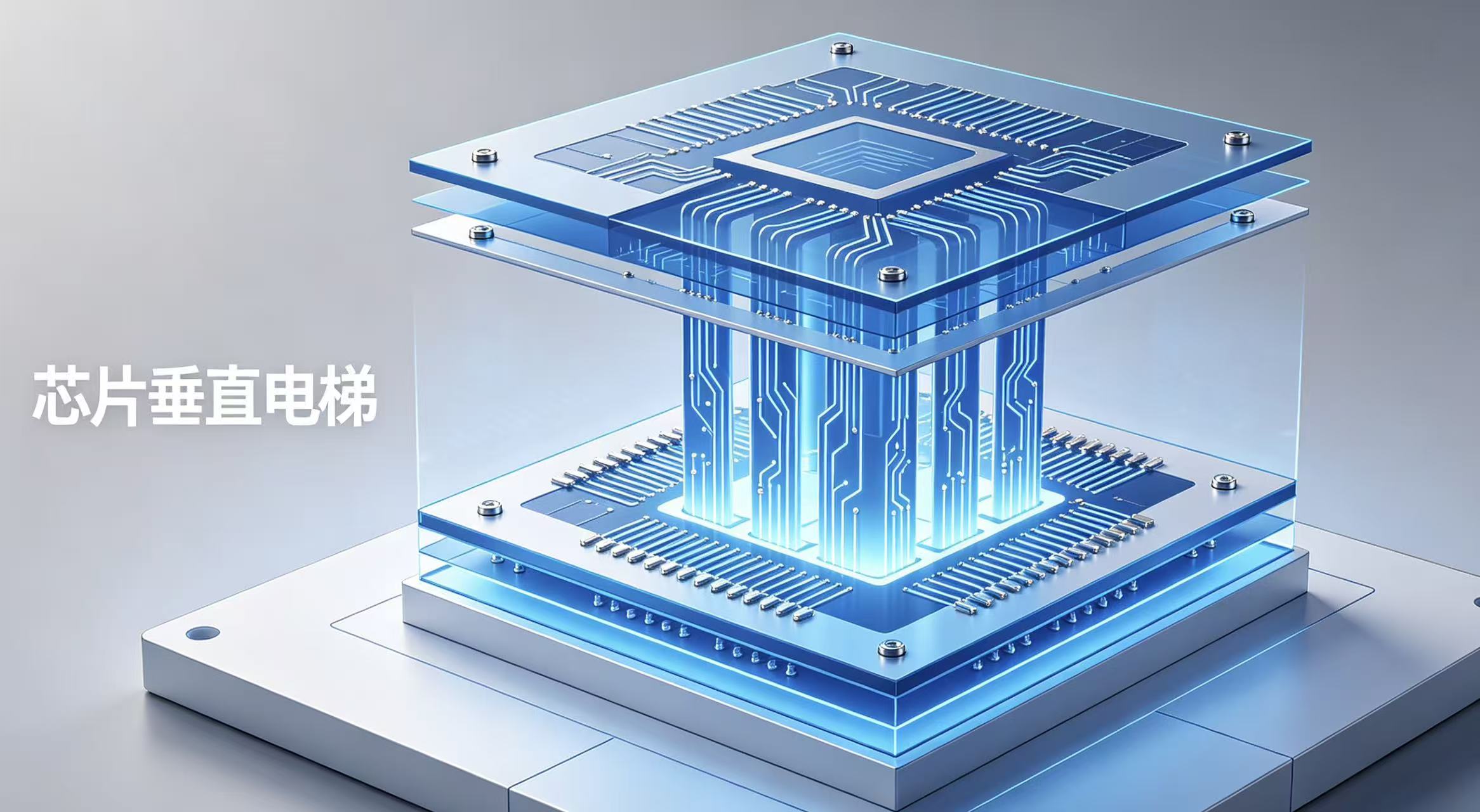
Step 3: Through-Silicon Via (TSV) Drilling—Opening Up "Floor Elevators"
Once the building's framework is erected, elevators must be installed to connect the upper and lower floors, and the same applies to chip stacking.
Technicians drill extremely fine Through-Silicon Vias (TSVs) inside the stacked chips; these holes are like dedicated elevators running through the entire building. Metallic material is filled into these holes, forming vertical circuits between the chips.
With these "elevators," upper and lower chips don't need to take detours—data travels vertically and directly, doubling the communication efficiency of the entire stacked chip without increasing its volume.
Step 4: Layered Stacking—Layer Upon Layer, Assembling a "Super Chip"
With the basic modules and interconnection channels fully ready, the true three-dimensional stacking officially begins.
Engineers precisely stack chips with different functions layer by layer according to the design plan: compute die on the bottom, memory die on top, with functional modules arranged in distinct zones. 3D Fabric supports high-density multi-layer stacking, with layer counts far exceeding traditional 3D packaging.
It's like building a mixed-use complex with residences, shopping malls, and offices on separate floors—each area performs its own role, integrating into a single all-powerful "super chip."
Step 5: External Wiring and Molding—Finishing and Reinforcement, Installing "External Connections"
Once the main structure of the skyscraper is complete, it's time to work on the exterior walls and public utility lines.
On the outermost layer of the stacked chip, fine external pins and wiring are fabricated, equivalent to the "main thoroughfares" of the entire building, responsible for exchanging data with the motherboard and external devices.
Subsequently, the entire assembly undergoes molding protection, where special encapsulation material completely wraps the stacked chip, protecting against dust, impact, and temperature fluctuations—dressing the delicate internal structure in a "protective suit."
Step 6: Final Inspection—Complete Physical Examination, Finished Product Shipment
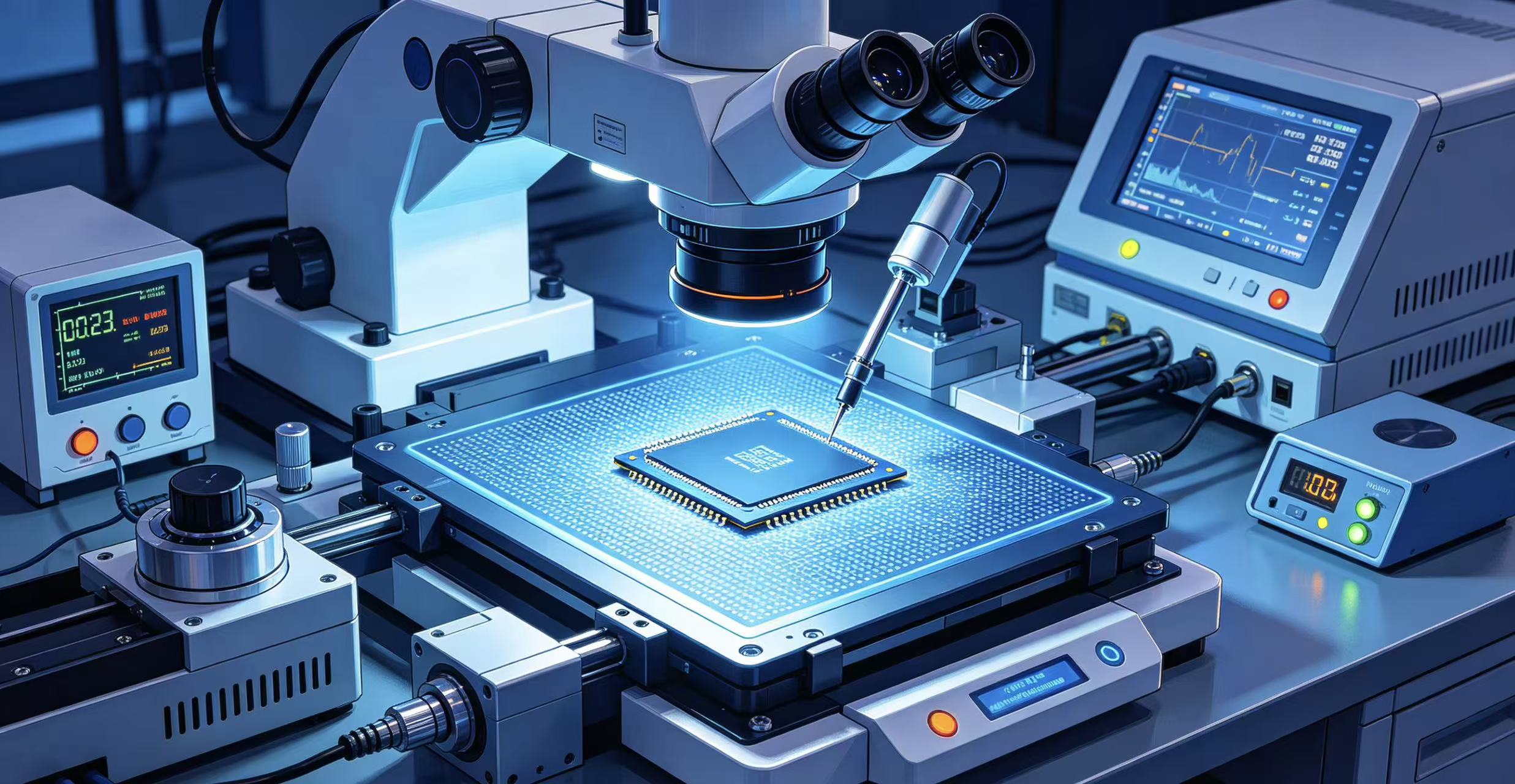
The final hurdle is comprehensive quality inspection.
Equipment tests every circuit's continuity, signal transmission speed, stability, and high-temperature resistance, simulating various scenarios of the chip's long-term operation. Only finished products where all indicators meet the standards are labeled and officially shipped.
Conclusion: What Exactly Makes 3D Fabric So Powerful?
Having walked through the entire process, the advantages of TSMC's 3D Fabric are clear at a glance:
1. Smaller Size: Three-dimensional stacking replaces planar tiling, significantly shrinking chip dimensions for equivalent performance, suitable for miniaturized devices such as smartphones, AI servers, and high-end graphics cards;
2. Faster Speed: Vertical direct connection reduces signal detours, greatly enhancing computing power and read/write speeds;
3. Strong Compatibility: Chips with different processes and functions can be freely combined without forcibly unifying process nodes, lowering R&D costs.
Nowadays, as the physical difficulty of advanced process nodes grows ever greater, advanced packaging has become the second battleground for breaking through chip performance.
And 3D Fabric is one of TSMC's core trump cards for maintaining its technological edge, also representing the mainstream direction for the future "three-dimensional development" of chips.
Shanghai Liyuan Micro Semiconductor Co., Ltd. is a professional SiP system-in-package solution development platform. For many years, we have provided customers with one-stop services and solutions, including ASIC chip design, SiP packaging design and simulation, SiP internal wafer procurement,
packaging production, system-level testing, reliability and failure analysis, and more. Our company offers free SiP/Chiplet design consultation and services to all customers, dedicated to helping clients achieve design goals such as small form factor,
low power consumption, and low cost. If interested, please feel free to contact us at +86 13817180836 (same number for WeChat).