Advanced Packaging Technology Decoded | Samsung: Mastering the "Chip Stacking" Art, Unleashing "Superpowers" for the AI Era
Have you ever wondered why the chips inside smartphones and AI servers keep getting smaller yet more powerful? One of the core secrets is advanced packaging—simply put, it's about efficiently "bonding" chips with different functions together,
like building blocks or a human pyramid, making them run faster while consuming less power. And Samsung is the all-around contender in this "chip stacking" competition!
I. Why Is Advanced Packaging So Hot? "Moore's Law" Slows Down, Packaging Steps Up
In the past, chips boosted performance by "shrinking dimensions" (Moore's Law). Now, transistors are approaching their physical limits—further shrinking is both difficult and expensive. So the industry shifted its mindset: instead of forcing size reduction, achieve strength through "teaming up"—
—using advanced packaging to bring different chips like CPUs, GPUs, and HBM (High Bandwidth Memory) extremely close together. With shorter data travel distances, speed takes off while power consumption drops.
This is the core playbook of the "post-Moore era," and Samsung set its sights on this "big prize" early on, armed with an unmatched advantage: the world's only manufacturer that simultaneously masters memory, foundry, and packaging across the entire industry chain!
II. Samsung's Three "Ace Packaging Technologies," Made Easy to Understand
Samsung bundles its advanced packaging technologies into three series—I-Cube, X-Cube, and SAINT—corresponding to 2.5D, 3D, and memory-logic co-packaging respectively. In plain terms: "side-by-side assembly," "vertical stacking," and "memory welded together."
1. I-Cube: 2.5D Packaging, Chips "Sitting Side by Side"
I-Cube is Samsung's 2.5D technology, centered on a silicon interposer—like a "super circuit board" on which chips like GPUs and HBM memory are laid out side by side, then connected together to the motherboard.
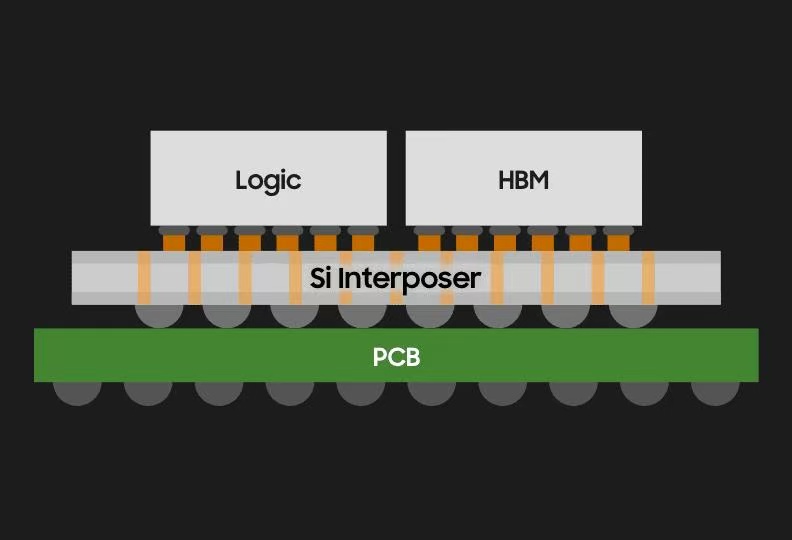
• Advantages: Chips are extremely close together, maximizing data transfer bandwidth, with well-controlled heat dissipation;
• Applications: AI servers, high-end graphics cards; for example, when paired with HBM3 memory, bandwidth can reach 1TB/s—hundreds of times that of standard DDR5 memory.
2. X-Cube: 3D Packaging, Chips "Stacked Vertically Like a Human Pyramid"
X-Cube is Samsung's 3D technology, vertically stacking chips directly, with upper and lower chips "pressed" face-to-face and connected by ultra-fine wiring.
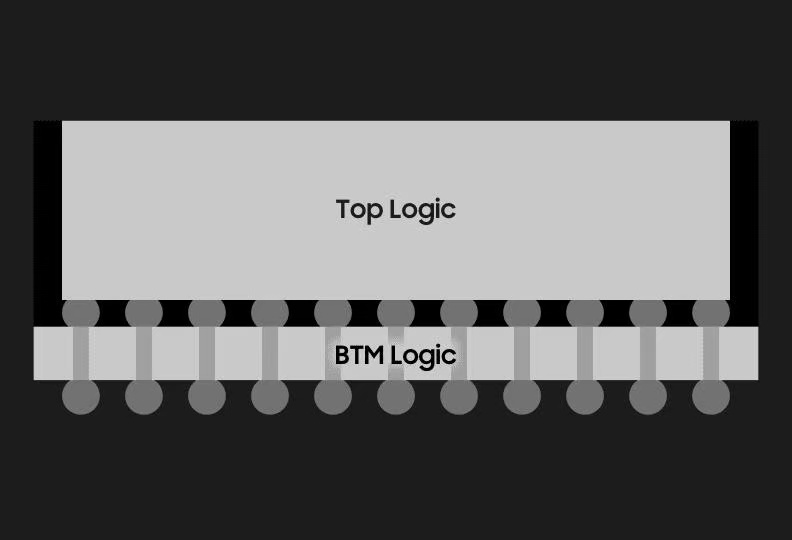
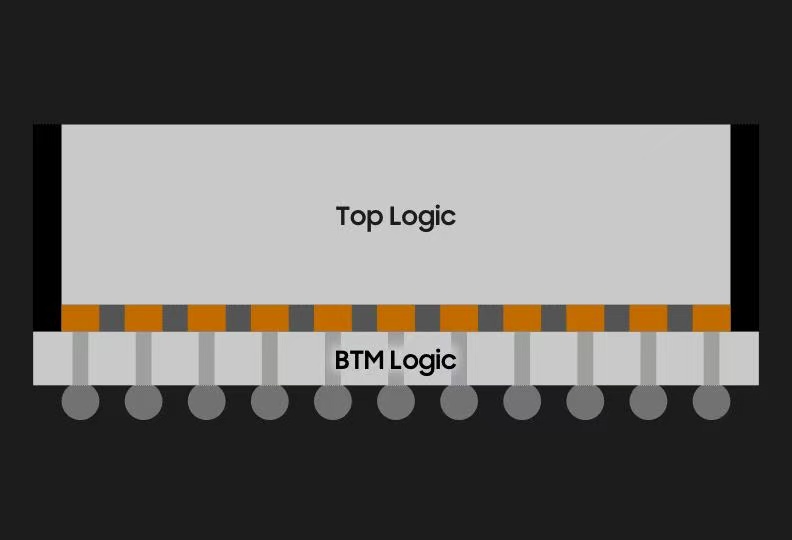
Two approaches:
• Bump Connection: Mature and cost-effective, suitable for mid-to-high-end smartphones and tablets;
• Hybrid Bonding: No bumps needed; direct copper-to-copper "welding" multiplies connection density several times over with better heat dissipation—the future mainstream for AI chips.
Simply put: I-Cube is "horizontal expansion," X-Cube is "vertical elevation," allowing chips to pack more functionality into a smaller volume.
3. SAINT: Storage + Logic "Welded Together," an AI-Exclusive "Super Combo"
This is Samsung's killer technology, short for "Storage and Logic Integration," specifically designed to solve the "memory wall" problem in AI chips—AI computes fast, but memory data can't keep up, like a sports car with a tiny fuel tank.
SAINT comes in three variants:
• SAINT-S: Stacks SRAM cache, commonly used in smartphones and tablets;
• SAINT-L: Stacks logic chips, boosting computational density;
• SAINT-D: The ultimate move! Stacks HBM memory directly on top of the CPU/GPU vertically, eliminating the need for a silicon interposer—simpler structure, faster speeds, lower costs.
III. Samsung's "Hidden Ultimate Move": V-die Vertical Technology, Disrupting Tradition
Beyond its three aces, Samsung is also brewing a super-sized ultimate move—V-die.
Traditional chips all "lie flat"; V-die makes the chip stand upright at 90 degrees, arranged like books on a shelf:
• Connections surge from 2,000 to 20,000 (10x);
• Bandwidth increases 4x, latency drops dramatically;
• Occupies no additional area, and can even be directly liquid-cooled.
This technology has already been accepted by the 2026 IEEE VLSI Symposium and will be officially unveiled this June, poised to completely rewrite the landscape of AI chip packaging.
IV. Why Is Samsung So Strong? Full Industry Chain + Strategic Reinforcement
1. Full-Stack Advantage: It manufactures its own HBM memory, does its own chip foundry, and handles its own packaging—a one-stop shop from design to mass production, enabling better optimization and lower costs;
2. Strategic Emphasis: At the end of 2022, it established a dedicated AVP (Advanced Packaging) team, elevating packaging to a strategic priority and rapidly responding to customer customization needs;
3. Technology Synergy: Memory (HBM) + Foundry (advanced process nodes) + Packaging (I/X/SAINT) are deeply integrated, offering customers "one-stop" AI chip solutions.
V. Summary: Samsung's "Packaging Ambition," Beyond Just Chips
For Samsung, advanced packaging is not just about "stacking chips"; it is a core competitive edge in the post-Moore era—leveraging I-Cube, X-Cube, and SAINT technologies, plus the V-die black technology,
to break down the barriers between memory, computing power, and packaging. The goal is clear: to compete head-to-head with TSMC in the AI chip arena and become the global leader in advanced packaging.
In the future, whether inside smartphones, AI servers, or autonomous vehicles, the chips will likely harbor Samsung's advanced packaging "black technology"—in this tiny stacking lies the power to change the world!
Shanghai Liyuan Micro Semiconductor Co., Ltd. is a professional SiP system-in-package solution development platform. For many years, we have provided customers with one-stop services and solutions, including ASIC chip design, SiP packaging design and simulation, SiP internal wafer procurement,
packaging production, system-level testing, reliability and failure analysis, and more. Our company offers free SiP/Chiplet design consultation and services to all customers, dedicated to helping clients achieve design goals such as small form factor,
low power consumption, and low cost. If interested, please feel free to contact us at +86 13817180836 (same number for WeChat).